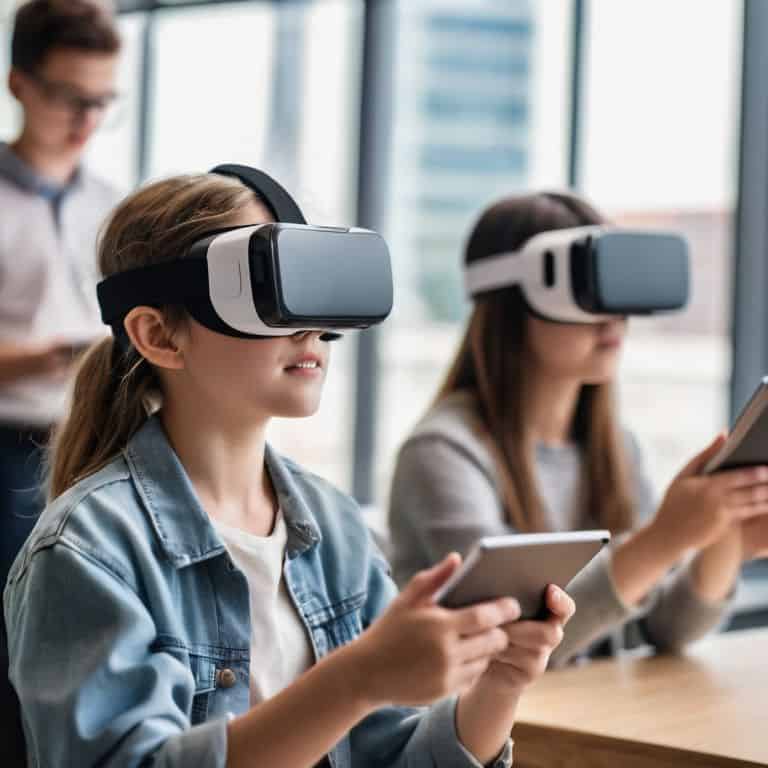
I still remember the day I first tried VR in my dorm room – it was like stepping into a whole new world. Now, as I explore the VR and AR in education landscape, I’m excited to see how this tech is transforming classrooms and making learning a wildly interactive adventure for kids. But let’s be real, there’s a lot of hype surrounding these technologies, and it’s easy to get caught up in the excitement without considering the practical implications. I’ve seen schools invest in fancy VR headsets without a clear plan for how they’ll be used, only to have them collect dust in a corner of the classroom.
As someone who’s passionate about making technology accessible and fun, I want to cut through the noise and provide a no-nonsense guide to using VR and AR in education. In this article, I’ll share my personal experiences and insights on how to effectively integrate these technologies into the classroom, from building interactive models to creating immersive learning environments. My goal is to provide you with honest, hype-free advice that you can actually use to enhance your teaching practices and engage your students in new and innovative ways. So, if you’re ready to explore the real potential of VR and AR in education, let’s dive in and see where this journey takes us, with my trusty sidekick, R2-D2, by our side.
Table of Contents
Vr and Ar in Education
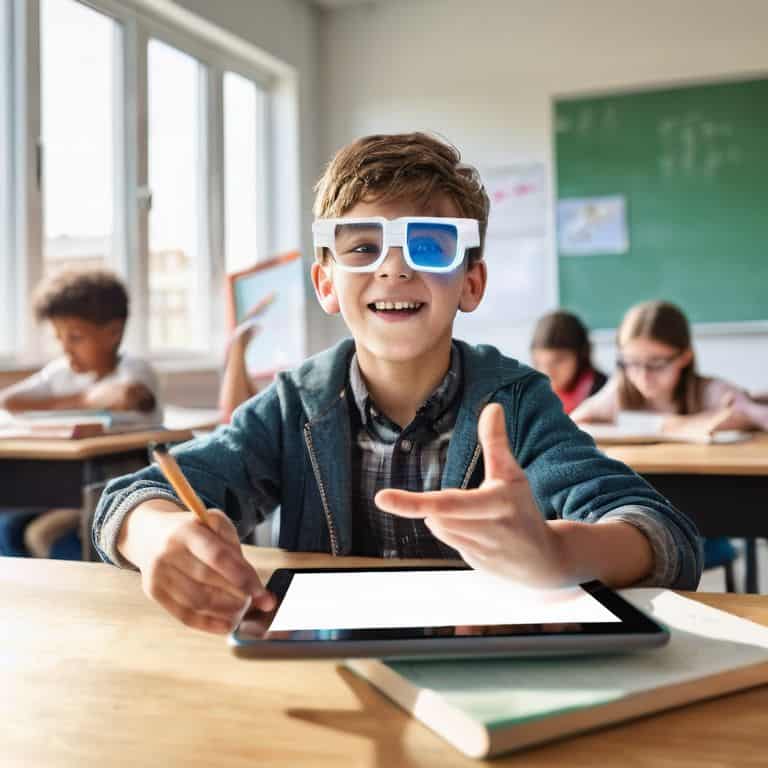
As I delve into the world of augmented reality field trips, I’m reminded of the countless hours I spent as a kid, fascinated by the possibilities of exploring new worlds from the comfort of my own home. With AR, students can now embark on virtual journeys to historical landmarks, mysterious planets, or even the human body, making learning an immersive experience like never before. My trusty sidekick, ‘Data’ the tablet, has been instrumental in helping me develop interactive lessons that bring complex concepts to life.
I’ve also had the chance to experiment with virtual reality lab simulations, which have revolutionized the way students engage with science and technology. By simulating real-world experiments in a controlled environment, students can conduct experiments that would be impossible or unsafe in a traditional classroom setting. This hands-on approach has not only improved understanding but also sparked a sense of curiosity and wonder in young minds. As I work on my latest project, a 3D modeling software for students, I’m excited to see how this technology will empower the next generation of innovators.
As I explore the frontiers of mixed reality educational games, I’m struck by the potential of artificial intelligence in classrooms to personalize learning experiences. By adapting to individual learning styles and abilities, AI-powered tools can help students learn at their own pace, making education more effective and enjoyable. Whether it’s ‘Geordi’ the smart glasses or ‘Worf’ the gaming console, each piece of tech gear has a story to tell, and I’m eager to see how they’ll shape the future of learning.
R2 D2s Virtual Field Trips
As I delved deeper into the world of VR and AR in education, my trusty laptop, R2-D2, and I started exploring the concept of virtual field trips. These immersive experiences allow students to visit distant lands and explore historical sites in a way that’s both engaging and interactive. With R2-D2 by my side, I’ve seen firsthand how these virtual excursions can spark a sense of wonder and curiosity in young minds.
R2-D2 has been instrumental in helping me design and implement these virtual field trips, and I’m excited to see how they can enhance student engagement. By leveraging VR and AR technology, we can create immersive experiences that make learning feel like an adventure, rather than a chore. Whether we’re exploring the depths of the ocean or wandering through ancient ruins, R2-D2’s virtual field trips are revolutionizing the way we approach education.
Spocks Ar Lab Simulations
As I delve into the world of augmented reality in education, my trusty smartphone, Spock, has been instrumental in helping me understand the potential of AR lab simulations. With interactive 3D models, students can now explore complex scientific concepts in a highly engaging and immersive manner. This has been particularly effective in subjects like chemistry and biology, where students can manipulate molecular structures and observe the effects of different variables in real-time.
One of the most significant advantages of AR lab simulations is the ability to provide students with a hands-on learning experience. By using Spock to scan QR codes and access virtual lab equipment, students can conduct experiments and investigations that would be impossible or impractical in a traditional classroom setting. This not only enhances their understanding of scientific principles but also develops their critical thinking and problem-solving skills.
Revolutionizing Classrooms
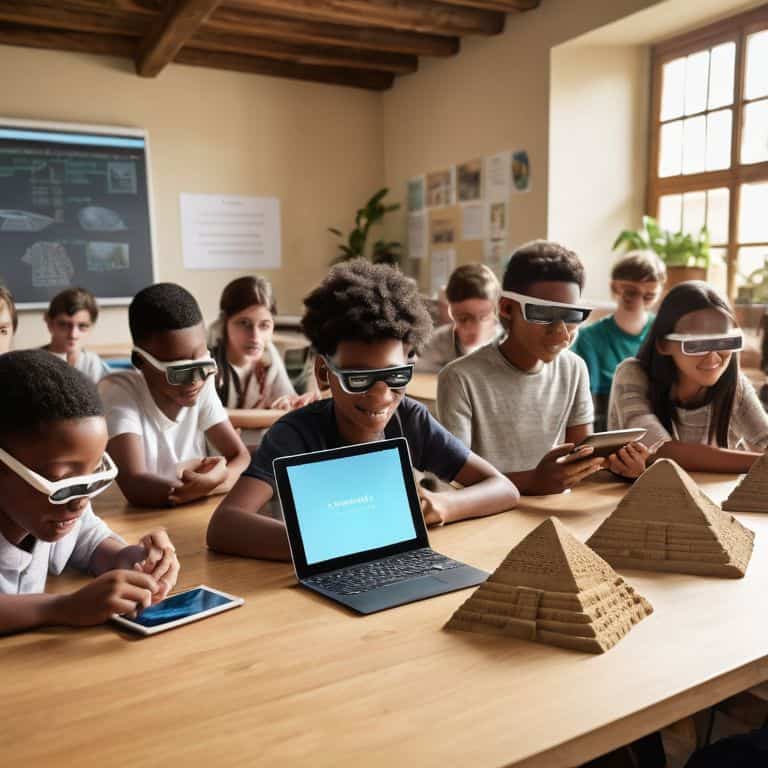
As I delve into the world of augmented reality field trips, I’m reminded of the countless hours I spent as a kid, fascinated by the possibility of exploring distant lands from the comfort of my own home. Now, with the help of my trusty laptop, ‘R2-D2’, I’ve been able to recreate this experience for students, bringing the magic of discovery right into the classroom. By leveraging mixed reality educational games, we can make learning a fun, interactive adventure that sparks imagination and curiosity.
One of the most exciting developments in this space is the integration of 3d modeling for students, allowing them to bring their creations to life in a fully immersive environment. I’ve seen firsthand how this can help students develop essential skills in problem-solving and critical thinking, as they learn to navigate and manipulate virtual objects. My smartphone, ‘Spock’, has been instrumental in helping me design and test these models, and I’m constantly amazed by the ingenuity of young minds as they explore the possibilities of virtual reality.
As we continue to push the boundaries of what’s possible in the classroom, I’m eager to see how artificial intelligence in classrooms will further enhance the learning experience. By harnessing the power of AI, we can create personalized learning paths that cater to each student’s unique needs and abilities, making education more effective and enjoyable. With ‘R2-D2’ and ‘Spock’ by my side, I’m excited to embark on this journey and explore the vast potential of educational vr content creation, shaping the future of learning and inspiring a new generation of innovators.
Ai Meets 3d Modeling
As I delve into the world of AI and 3D modeling, I find myself fascinated by the synergistic potential of these two technologies. My trusty laptop, R2-D2, has been instrumental in helping me explore this intersection, where artificial intelligence can be used to generate complex models with unprecedented ease and accuracy.
I’ve been experimenting with generative design tools, which allow me to create intricate models of futuristic cities, like the ones I’ve always been passionate about building with recycled tech components. This fusion of AI and 3D modeling has opened up new avenues for creativity and innovation, enabling me to bring my imaginative concepts to life in ways that were previously unimaginable.
Mixed Reality Educational Games
As I delve into the world of mixed reality educational games, I’m reminded of the countless hours I spent building models of futuristic cities with recycled tech components. It’s fascinating to see how immersive storytelling can be used to teach complex concepts in an engaging way. My laptop, ‘R2-D2’, has been a trusted companion in exploring these innovative games, and I’m excited to share my findings.
The impact of mixed reality on learning outcomes is undeniable, with many students showing improved retention rates when using interactive simulations. By incorporating game design elements, educators can create an environment that’s both fun and educational, making the learning process an enjoyable experience for students.
Navigating the Cosmos of Learning: 5 Stellar Tips for Implementing VR and AR in Education
- Embrace the Holodeck Factor: Use VR to transport students to historical events, distant planets, or even inside the human body, making complex concepts feel like immersive adventures
- Augment Your Arsenal: Leverage AR to bring textbooks to life, allowing students to interact with 3D models, videos, and more, all from the comfort of their classroom or home
- Spock’s Wisdom: Encourage critical thinking and problem-solving skills through AR-powered lab simulations, where students can conduct experiments and analyze results in a safe, controlled environment
- R2-D2’s Reality Check: Ensure seamless integration of VR and AR tools by providing comprehensive training for educators, so they can confidently navigate these innovative technologies
- May the Code Be With You: Foster a culture of creativity and collaboration by incorporating VR and AR into project-based learning, where students can design, develop, and showcase their own immersive experiences
Key Takeaways from My Tech Trek
I’ve seen firsthand how VR and AR can transport students to new dimensions, making complex concepts easier to grasp – just ask R2-D2 about his virtual field trips to the moon!
By combining Spock’s logical approach to AR lab simulations with AI-driven 3D modeling, we can create immersive, interactive learning experiences that would make even the most skeptical Vulcan proud
As I continue to explore the frontiers of mixed reality educational games, I’m excited to see how they’ll revolutionize the way we learn, turning classrooms into holodecks of knowledge where the boundaries between reality and fantasy blur
Immersive Learning Revolution
As I’ve seen with my own eyes, and through the digital lens of my trusty companions like R2-D2 and Spock, the fusion of VR and AR in education doesn’t just enhance the learning experience – it catapults students into a boundless universe of interactive discovery, where the lines between fantasy and reality blur, and the thrill of the unknown becomes the catalyst for a lifelong journey of curiosity and innovation.
Nicholas Lawson
Embracing the Future of Learning
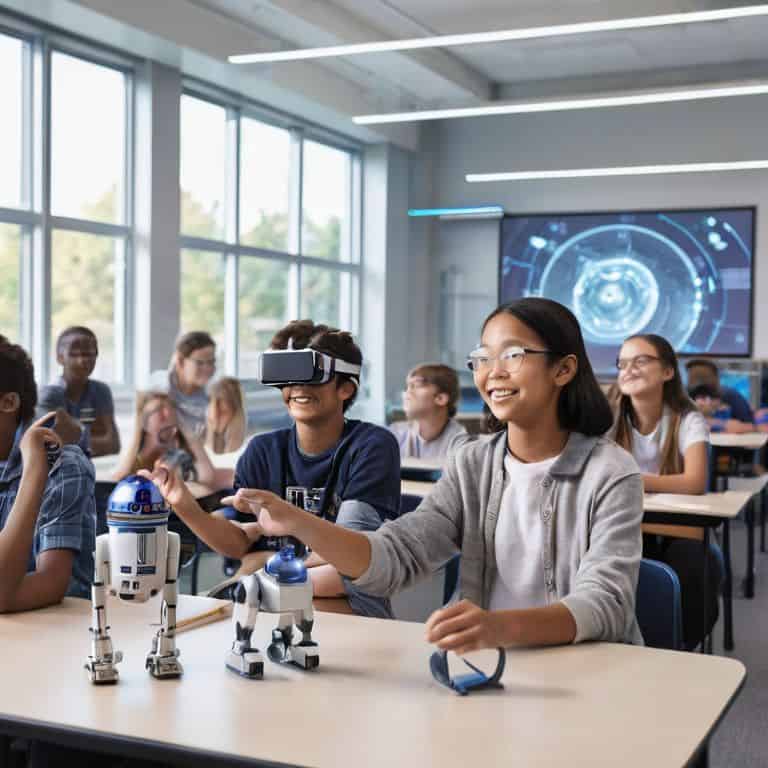
As I reflect on the journey of VR and AR in education, it’s clear that these technologies are not just trends, but game-changers. From R2-D2’s Virtual Field Trips to Spock’s AR Lab Simulations, and from Mixed Reality Educational Games to AI Meets 3D Modeling, the applications are vast and the potential is immense. By leveraging these tools, educators can create immersive, interactive, and highly engaging learning experiences that cater to different learning styles and abilities, making education more accessible and enjoyable for all. The impact on student engagement, understanding, and retention is already being felt, and as these technologies continue to evolve, we can expect even more innovative approaches to emerge.
The future of education is not just about technology; it’s about human connection and creative exploration. As we move forward, it’s essential to remember that VR and AR are not replacements for traditional teaching methods, but rather complements that can enhance the learning experience. By embracing these technologies and fostering a culture of innovation and experimentation, we can unlock new possibilities for students, educators, and the entire education ecosystem. As I pack up my trusty sidekicks, R2-D2 and Spock, I’m excited to see what the next chapter in this journey holds, and I invite you to join me on this thrilling adventure into the unknown, where the boundaries of learning are stretched, and the love for discovery is ignited.
Frequently Asked Questions
How can teachers effectively integrate VR and AR into their existing curriculum without disrupting the traditional learning flow?
I’ve seen teachers seamlessly weave VR and AR into their lesson plans by aligning them with existing learning objectives, like using ‘R2-D2’ to transport students to historical sites or ‘Spock’ to visualize complex math concepts, making the transition feel like a natural evolution rather than a disruption.
What are the most significant challenges in implementing VR and AR in underfunded schools or areas with limited access to technology?
I recall discussing this with my buddy ‘Data’ the desktop – he’s always crunching numbers on tech accessibility. Implementing VR and AR in underfunded schools poses significant challenges, including outdated infrastructure, lack of devices like my trusty ‘Geordi’ tablets, and insufficient teacher training, which can hinder the effective integration of these innovative technologies.
Can VR and AR be used to help students with disabilities or special needs, and if so, what kinds of experiences can they provide?
I’ve seen ‘C-3PO’ my assistive tech gadget, help students with disabilities explore virtual museums, and ‘Geordi’ my AR visor, assist with interactive braille lessons – it’s amazing to see how VR and AR can provide inclusive, immersive experiences for students with special needs, fostering independence and confidence.