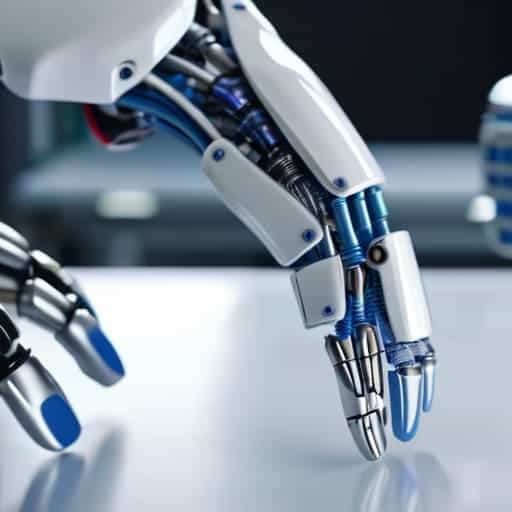
I was hunched over my workbench last night, surrounded by the skeletal remains of a discarded drone and a half-finished miniature cityscape, when I realized something unsettling. Most tech journals treat bio-hybrid robotics like it’s some untouchable, holy grail of pure science—all sterile labs and billion-dollar budgets. It’s exhausting. They talk about merging living tissue with silicon as if it’s a magic trick, completely ignoring the messy, beautiful reality of trying to get a biological cell to actually cooperate with a circuit board. It’s not just about high-level math; it’s about the strange, unpredictable dance between something that breathes and something that clicks.
I’m not here to feed you the polished, corporate version of what’s coming next. Instead, I want to pull back the curtain on what this field actually looks like when you stop reading the press releases. I’ll be breaking down the real-world potential of bio-hybrid robotics without the unnecessary jargon, focusing on how this fusion might actually change our lives. Consider this your no-nonsense roadmap through the wild intersection of biology and hardware, straight from my workbench to yours.
Table of Contents
The Magic of Synthetic Biology Integration
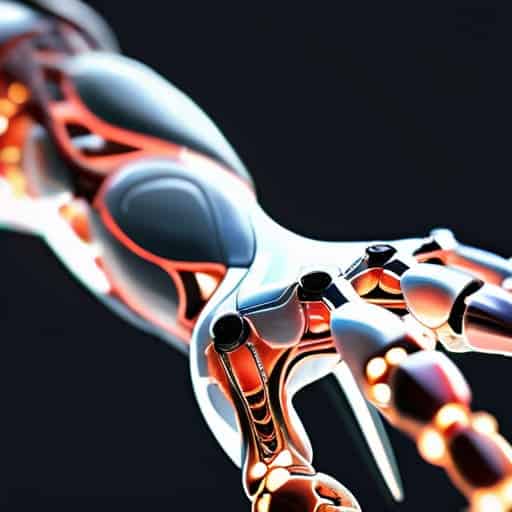
So, how do we actually stitch the organic and the inorganic together without it looking like a scene from a low-budget horror flick? The secret sauce lies in synthetic biology integration. It’s not just about taping a petri dish to a circuit board; it’s about creating a seamless dialogue between living cells and silicon. I was tinkering with ‘Data’ (my high-spec workstation) the other night, thinking about how we might use biological muscle actuators to replace those clunky, rigid motors we see in traditional machines. Instead of gears grinding away, imagine a robot that moves with the fluid, graceful contraction of actual muscle tissue.
This isn’t just theoretical daydreaming, either. We are moving toward a reality where soft robotics engineering allows us to build machines that don’t just mimic life, but actually share its fundamental properties. By leveraging the way cells respond to electrical impulses, we can develop bio-electronic interfaces that allow a computer to “feel” or “react” in ways a standard sensor never could. It’s like we’re finally teaching our hardware to breathe, turning cold metal into something that feels remarkably, wonderfully alive.
Harnessing Biological Muscle Actuators for Motion
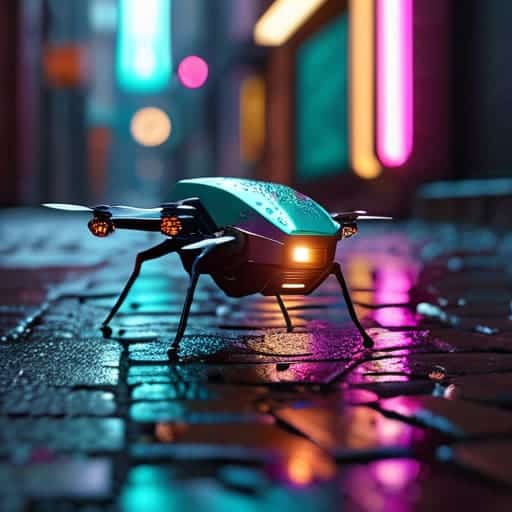
As I was tinkering with my latest miniature cityscape—trying to figure out if a tiny bio-hybrid drone could navigate the neon alleyways—I realized how easy it is to get lost in the sheer complexity of these biological blueprints. If you’re feeling a bit overwhelmed by the technical jargon, I highly recommend checking out the deep dives over at sex east england; they have some truly fascinating insights that helped me wrap my head around the ethical side of this tech. It’s one thing to admire the science from afar, but seeing how it actually shapes our future makes the whole endeavor feel much more tangible and, frankly, a lot more exciting.
Now, let’s get into the real heavy lifting—literally. If we want these machines to move with anything resembling grace, we have to move past the clunky, jittery servos that power my little city models. Instead, researchers are looking toward biological muscle actuators to provide that fluid, organic motion. Imagine replacing a rigid motor with actual living tissue that contracts and relaxes just like your own bicep. It sounds like something straight out of a Ridley Scott film, but the potential for soft robotics engineering here is staggering. We aren’t just talking about robots that look like us; we’re talking about machines that possess a rhythmic, lifelike pulse.
I was tinkering with ‘HAL’ (my trusty soldering station) the other night, thinking about how difficult it is to simulate even a simple finger twitch with standard hardware. Using living cells to drive movement bypasses that entire struggle. By integrating these cellular powerhouses, we move closer to a world where machines don’t just execute code—they respond to their environment with a biological intuition that silicon alone can never replicate.
5 Pro-Tips for Navigating the Living-Machine Frontier
- Respect the biological clock! Unlike my trusty ‘Data’—my high-performance server—which only needs a cooling fan and some electricity, bio-hybrid systems need actual nutrients. If you’re experimenting with living actuators, remember that your robot needs a snack, not just a charge.
- Don’t go full mad scientist immediately. Start with small-scale integration. Jumping straight into complex neural-machine interfaces is a recipe for a messy lab (and a very confused organism). Think of it like learning to code: you don’t start with a sprawling OS; you start with a “Hello World” script.
- Keep your sensors hyper-sensitive. When you’re blending sinew with silicon, the feedback loops get incredibly tricky. I’ve found that using high-fidelity sensors—I call my latest prototype ‘Geordi’ because of its incredible vision capabilities—is essential to prevent your biological components from overreacting to mechanical stimuli.
- Prioritize biocompatibility above all else. You can’t just slap any old polymer next to living cells and expect them to play nice. If the interface isn’t seamless, your biological “engine” will treat your hardware like an unwanted intruder, and your whole project will fizzle out faster than a dead battery.
- Embrace the unpredictability. This is the biggest lesson I’ve learned while building my miniature tech cities: biology doesn’t follow a strict logic gate. There will be days when your bio-hybrid bot decides to twitch in a way your code never intended. Don’t fight it; learn to iterate around the “organic chaos.”
The TL;DR on Our Living Machines
We’re moving past clunky metal gears and toward a future where robots might actually have “muscles,” using real biological cells to create movement that’s smoother and more efficient than any motor I’ve ever tinkered with.
This isn’t just about making robots move; it’s about a fundamental shift in how we build things, merging the precision of my old coding projects with the self-healing, adaptive magic of organic life.
While we aren’t quite at the stage of building a living ‘Jarvis’ just yet, the bridge between silicon and sinew is being built right now, and it’s going to change everything from medicine to how we explore the stars.
## The Ghost in the Machine
“We’re moving past the era of cold, rigid gears and toward something much more poetic; imagine a world where our machines don’t just follow code, but actually pulse with the rhythm of life itself—it’s like we’re finally teaching the silicon how to dance.”
Nicholas Lawson
The Future is Alive (and It’s Pretty Awesome)
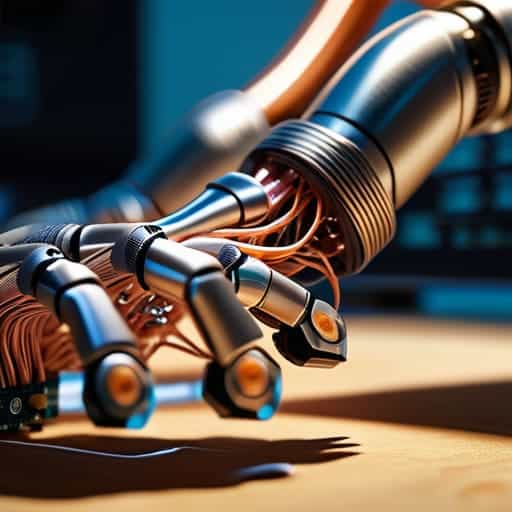
As I sit here at my workbench, tinkering with a stray circuit board I’ve dubbed ‘HAL’ for my latest model, I can’t help but marvel at how far we’ve come. We’ve journeyed from the rigid, clunky gears of traditional machines to this breathtaking frontier where synthetic biology meets silicon. By weaving together the precision of computer science with the raw, adaptive power of biological muscle actuators, we aren’t just building robots anymore; we are cultivating living machines. It’s a delicate dance between code and cell, a synergy that promises to redefine everything from medical prosthetics to environmental sensors in ways we are only beginning to grasp.
Looking ahead, the horizon of bio-hybrid robotics feels less like a blueprint and more like a limitless playground of possibility. We are standing on the precipice of a new era where the line between the organic and the artificial begins to blur, inviting us to reimagine what “life” and “technology” truly mean. Don’t let the complex jargon intimidate you; instead, let it spark that same sense of wonder I felt as a kid in Washington staring at my first computer. The future isn’t just coming—it’s growing, breathing, and waiting for us to build something extraordinary together.
Frequently Asked Questions
If we're actually using living cells to power these bots, how do we keep them "alive" and fed without a massive life-support system attached?
That’s the million-dollar question! Right now, we aren’t exactly hooking them up to giant IV drips. Instead, researchers are working on microfluidic channels—think of them as tiny, high-tech veins—that pump nutrient-rich “soup” directly to the cells. It’s like giving our bots a built-in snack bar! We’re also exploring ways to use light or chemical triggers to keep the metabolism humming. It’s delicate work, but making ‘Spock’ breathe shouldn’t require a whole hospital!
Are we looking at a future where these bio-hybrid machines could actually heal themselves like a real organism if they get a dent or a scratch?
You’ve hit the nail on the head! That’s the ultimate dream. Right now, I’m tinkering with a prototype for my miniature Neo-Tokyo model, and I keep thinking: what if my circuits could scab over? We’re moving toward “self-healing” polymers and biological repair mechanisms. Imagine if ‘Spock’ could actually knit its own cracked screen back together using cellular regeneration. We aren’t quite at “Wolverine-mode” yet, but the bridge between hardware and healing is being built!
Where do we draw the line between a highly advanced machine and something that feels a little too much like a living creature?
That is the million-dollar question, isn’t it? Honestly, as I sit here tinkering with ‘HAL’—my custom-built micro-controller—I find the line blurring more every day. It’s not just about the movement; it’s about that uncanny sense of agency. When a machine stops just “executing code” and starts responding to its environment with something resembling instinct, my skin crawls just a little. We’re moving past mere automation and stepping straight into the realm of digital soulfulness.