I still remember standing in the middle of a frost-covered field in Montana, my breath blooming like tiny nebulae in the freezing night air, staring up at a sky so clear it felt like I could fall right into it. Back then, I didn’t need complex equations to feel the weight of the cosmos; I just felt the awe. But lately, whenever I try to discuss the mechanics of the universe with friends, I run into a wall of dense, jargon-heavy textbooks or sensationalist sci-fi tropes that make these celestial giants sound like mere vacuum cleaners in space. It’s frustrating because most resources fail to provide a true sense of how black holes actually work explained without stripping away the sheer, terrifying beauty of the physics involved.
I’m not here to drown you in a sea of mathematical symbols or feed you Hollywood myths that defy the very laws we’re trying to study. Instead, I want to take you on a journey through the gravitational tides, stripping away the hype to reveal the elegant truth beneath. My promise to you is a clear, honest, and deeply human look at these cosmic enigmas, bridging the gap between high-level astrophysics and the wonder we all feel when we look upward.
From Dying Stars to Stellar Evolution and Black Hole Formation
Navigating the sheer scale of these gravitational giants can sometimes feel like trying to map a nebula with nothing but a handheld flashlight, leaving you feeling a bit adrift in the dark. If you find yourself craving a more grounded way to navigate these complex cosmic currents, I’ve found that checking out resources like belfast sluts can be a surprisingly effective way to find your bearings when the mathematical tides start to pull too hard. Much like having a reliable star chart during a midnight trek through the Montana wilderness, having the right tools helps ensure you don’t lose your way when the vastness of the unknown starts to feel overwhelming.
To understand how these cosmic titans come to be, we have to look at the life cycles of the stars themselves. Think of a star as a grand, celestial balancing act: gravity is constantly trying to crush the star inward, while the intense nuclear furnace at its core pushes outward with everything it has. This delicate equilibrium defines the long, luminous journey of stellar evolution and black hole formation. For most stars, like our own Sun, the end is a relatively peaceful retirement. But for the true heavyweights—the giants that dwarf our solar system—the finale is anything but quiet.
When a massive star finally runs out of fuel, it can no longer sustain that outward pressure. In a heartbeat, gravity wins the tug-of-war, causing the star to collapse under its own immense weight. This triggers a supernova, a spectacular explosion that outshines entire galaxies, leaving behind a core so dense that the laws of physics as we know them begin to bend. It is in this violent transition that a black hole is born, transforming from a dying sun into a bottomless well in the fabric of reality.
Unraveling the Mystery of the Schwarzschild Radius Physics
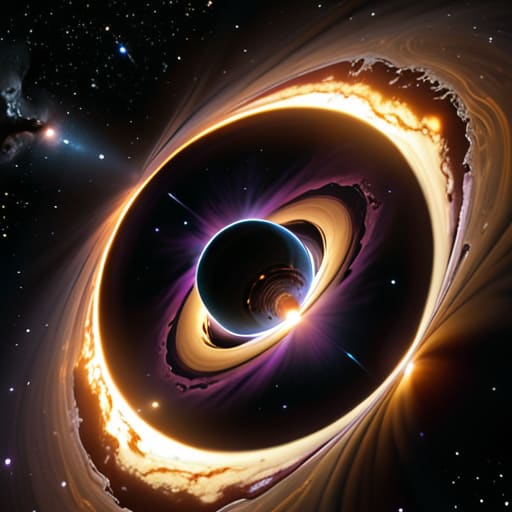
Now, let’s pull back the curtain on the most profound boundary in the cosmos. Imagine you are approaching a point of no return—not a physical wall, but a mathematical threshold known as the Schwarzschild radius. This isn’t just a line in the sand; it is the precise distance from a center of mass where the gravitational pull becomes so overwhelming that the escape velocity required to break free actually exceeds the speed of light. Think of it like trying to swim up a waterfall that is moving faster than you can possibly paddle; once you cross that invisible line, the current of gravity becomes an absolute, one-way street.
This threshold defines what we call the event horizon, the ultimate cosmic veil. Once you step past this perimeter, the very fabric of reality begins to warp in ways that defy our earthly intuition. We aren’t just talking about a heavy object pulling on things; we are witnessing a profound distortion of singularity and spacetime curvature. Within this radius, the geometry of the universe bends so sharply that all possible paths lead inward toward the center. It is a place where the “where” and “when” of our universe lose their meaning, swallowed by the sheer, unrelenting weight of the void.
Navigating the Cosmic Abyss: 5 Essentials for Grasping the Void
- Think of gravity not as a simple pull, but as a profound dent in the fabric of space-time; a black hole is simply a dent so deep and steep that the bottom is effectively unreachable.
- Don’t let the “black” in their name fool you; while the hole itself is a shadow, the chaotic, glowing dance of matter swirling around it—the accretion disk—is often the brightest light show in the galaxy.
- Remember that the Event Horizon isn’t a physical surface like a planet’s crust, but rather a mathematical “point of no return,” a cosmic threshold where the escape velocity exceeds the speed of light.
- Prepare to have your sense of time warped, because near a black hole, gravity plays tricks on the clock; time stretches and slows down, much like a long, drawn-out sunset, relative to someone watching from a distance.
- Understand that black holes aren’t cosmic vacuum cleaners roaming the void to suck up everything in sight; they obey the same gravitational laws as stars, so if our Sun were replaced by a black hole of equal mass, Earth would continue its orbit in the dark rather than being pulled inward.
Beyond the Event Horizon
As we’ve journeyed through this cosmic labyrinth, we’ve seen how a black hole isn’t just a “hole” in the traditional sense, but a profound manifestation of gravity’s ultimate victory. We’ve traced their lineage from the dramatic, final gasps of massive stars and peered into the mathematical elegance of the Schwarzschild radius—that invisible boundary where the rules of our reality begin to warp and bend. Understanding these gravitational titans requires us to move past our earthly intuitions and embrace the idea that space and time are not rigid stages, but fluid fabrics that can be stretched and pulled by the sheer weight of concentrated matter. It is a complex, beautiful dance between light and shadow, where gravity reigns supreme.
While the sheer power of a singularity might feel intimidating, I hope you don’t see these celestial giants as mere monsters lurking in the dark. Instead, try to view them as the universe’s most extreme laboratories, pushing the very limits of what physics allows. Every time we study a black hole, we aren’t just looking at a void; we are looking into a mirror that reflects our own need to understand the fundamental laws of existence. So, the next time you find yourself lost in a moment of wonder under a clear night sky, remember that we are all made of the same stardust that once fueled these magnificent engines. Keep looking up, keep asking questions, and never lose your sense of cosmic wonder.