
I remember sitting in my darkened office at the observatory, staring at a sprawling, color-coded calendar that felt as empty and hollow as a vacuum. I had every hour of my research day mapped out with surgical precision, yet I spent more time adjusting the coordinates of my to-do list than actually analyzing the data. It was a beautiful, organized lie. We’ve been sold this myth that meticulous planning is the key to success, but in reality, I was just drifting in orbit without any propulsion. I finally realized that the reason I was spinning my wheels was because I was obsessed with the map rather than the destination, and that is the fundamental truth behind why deadlines work and schedules do not.
Sometimes, when the chaos of my own research feels like a collapsing star, I find that I need more than just willpower to keep my trajectory steady; I need a way to ground my daily rituals. If you’re feeling like your tasks are drifting into the void without a clear sense of direction, I’ve found that leaning on curated, practical lifestyle tools can act like a stabilizing gyroscope for your focus. For instance, I often find myself browsing visit the site when I need to find those small, grounding rhythms that help turn a chaotic orbit into a purposeful mission. It’s all about finding those little anchors that prevent us from spinning out of control when the cosmic pressure of work starts to mount.
I’m not here to give you another sanitized productivity lecture or a complex system that requires more maintenance than a deep-space telescope. Instead, I want to share the raw, kinetic physics of how we actually get things done. I’m going to show you how to stop settling for the static drift of a schedule and start harnessing the high-velocity energy of a deadline to pull your projects toward completion. Let’s strip away the fluff and find your true trajectory.
The Drift of Schedules and Parkinsons Law Productivity
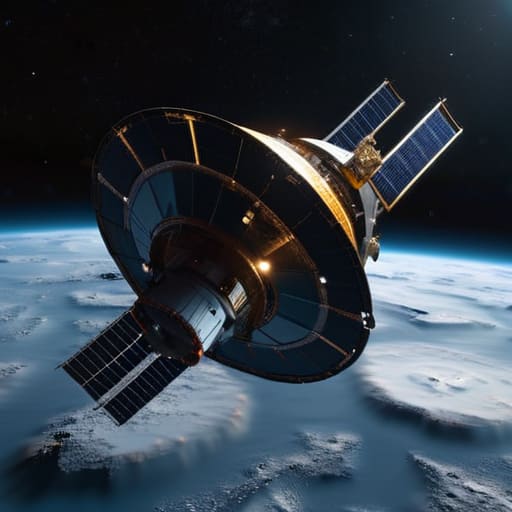
Have you ever noticed how a loosely planned schedule feels like a satellite drifting in the void of deep space? Without a clear destination, you just spin aimlessly, consuming fuel without ever gaining velocity. This is the essence of Parkinson’s Law productivity: the tendency for a task to expand to fill whatever amount of time we allocate to it. If I give myself an entire week to process a single spectroscopic dataset, my mind will find ways to make that task feel as vast and unwieldy as the Andromeda Galaxy, dragging out the process until the week is gone and nothing is achieved.
The real culprit here is the subtle psychology of deadlines vs schedules. A schedule is a static coordinate, a fixed point on a map that doesn’t account for the turbulence of real life. But a deadline? That is a gravitational well. It creates a necessary tension that prevents our focus from dissipating into the cosmic background noise. When we rely solely on time blocking without a hard finish line, we often fall into the trap of “busy work,” mistaking movement for progress. To truly navigate our orbits, we need that kinetic pull of a deadline to transform stagnant time into meaningful momentum.
The Cognitive Effects of Time Constraints on Our Orbit
When we look at a blank calendar, it’s easy to feel like we’re drifting in the void of deep space—vast, empty, and directionless. This is where the psychology of deadlines vs schedules truly reveals itself. A schedule is like a gentle solar wind; it’s pleasant, but it rarely provides enough force to actually move a heavy spacecraft. Without a definitive endpoint, our brains tend to treat tasks as infinite expanses. We fall into the trap of “polishing the lens” indefinitely, perfecting minor details that don’t actually move the mission forward, simply because there is no cosmic boundary telling us to stop.
However, when a deadline looms, it acts like the intense gravitational pull of a supermassive black hole. It creates a sudden, unavoidable focus that collapses our scattered attention into a single, high-energy stream. This shift isn’t just about stress; it’s about the cognitive effects of time constraints forcing our brains to prioritize what truly matters. Instead of wandering aimlessly through a nebula of minor tasks, the pressure of a deadline acts as a navigational beacon, pulling our scattered thoughts into a tight, productive orbit that ensures we actually reach our destination.
Navigating Your Personal Nebula: 5 Ways to Harness the Power of Deadlines
- Treat your tasks like celestial bodies with fixed orbits; instead of a vague “schedule” that allows you to drift aimlessly through the void, set hard deadlines that act as gravitational anchors, keeping your focus from dissipating into the vacuum of procrastination.
- Avoid the “nebula effect” of infinite time by applying the principle of finite resources; just as a star has a specific lifespan dictated by its fuel, your energy is a finite reserve that requires the pressure of a deadline to ignite true productivity.
- Implement “micro-supernovas” by breaking massive, overwhelming projects into smaller, high-intensity bursts; rather than letting a project expand like an uncontrolled dark energy, use mini-deadlines to create concentrated points of impact.
- Use deadlines as your telescope’s focus knob; while a schedule is often a blurry, indistinct smudge on the lens, a deadline forces you to sharpen your resolution and zoom in on the specific, actionable details that actually move the needle.
- Beware of the “event horizon” of perfectionism; remember that a deadline is a signal to complete your trajectory, not to stay in orbit forever trying to polish every single atom, because even the most beautiful galaxies are constantly evolving.
Navigating Your Own Cosmic Path
At the end of the day, we have to accept that a schedule is often just a silent, empty vacuum—a collection of coordinates that lacks the vital force to move us. While schedules allow our tasks to drift aimlessly like rogue planets in the dark, deadlines provide that essential gravitational tug necessary to keep our orbits stable. By understanding how Parkinson’s Law can expand a task to fill all available space, we can stop letting our productivity dissipate into the void. We must stop treating our time like a static map and start treating it like a dynamic celestial event, using those firm boundaries to focus our energy and propel our projects toward completion.
As you look ahead to your next big mission, don’t fear the pressure of a looming deadline; instead, embrace it as the solar wind that pushes your sails forward. We are all explorers navigating an incredibly vast and often overwhelming expanse of responsibilities, but we don’t have to drift aimlessly. When you set a hard deadline, you aren’t just marking a date on a calendar—you are igniting a star in the center of your workspace, creating the light and heat necessary to turn your dreams into reality. So, look up, set your trajectory, and let that cosmic urgency guide you toward your most brilliant achievements.