I still remember standing in my grow room at 3:00 AM, sweating through my shirt and staring at a hygrometer that seemed to be lying to my face. I was chasing numbers on a spreadsheet, manually tweaking fans and humidifiers like a madman, only to realize I was playing a losing game of whack-a-mole. Most “experts” will try to sell you a $5,000 proprietary ecosystem to fix this, but the truth is much simpler: if you aren’t utilizing Vapor-Pressure Deficit Automation Loops, you aren’t actually controlling your environment—you’re just reacting to it.
I’m not here to give you a theoretical lecture or a list of expensive gadgets you don’t need. Instead, I’m going to show you how to build a system that actually thinks for itself. We are going to strip away the fluff and dive straight into the mechanics of setting up Vapor-Pressure Deficit Automation Loops that work in the real world, not just in a laboratory. By the time we’re done, you’ll have a bulletproof strategy to stabilize your climate so you can finally stop babysitting your sensors and start actually growing.
Table of Contents
Relative Humidity vs Vpd the Precision Growth Gap

Most growers get stuck in the “humidity trap,” thinking that if they just keep their hygrometer at 60%, everything is fine. But here’s the reality: relative humidity is a blunt instrument. It tells you how much water is in the air, but it says absolutely nothing about how your plants are actually breathing. If your temperature spikes, that 60% RH suddenly becomes much “drier” in terms of plant stress, even though the number on the wall hasn’t changed. This is the fundamental flaw in relying solely on RH; it ignores the thermal component that drives the actual drying power of the air.
To bridge this gap, you have to shift your focus to the relationship between temperature and moisture. This is where relative humidity vs VPD becomes the deciding factor in your yields. While RH is just a static measurement, VPD accounts for the temperature-driven pressure that forces moisture out of the leaf. By prioritizing VPD, you aren’t just managing air moisture; you are achieving true plant stomatal conductance optimization. You’re ensuring the plant stays open and hungry for nutrients rather than slamming its pores shut to avoid dehydration.
Smart Greenhouse Sensor Integration for Real Time Accuracy
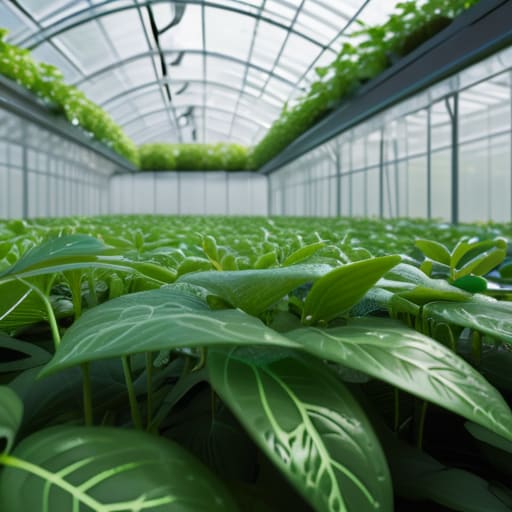
You can’t manage what you don’t measure, and if you’re relying on a single, cheap hygrometer hanging in the corner of the room, you’re essentially flying blind. Real precision requires smart greenhouse sensor integration that places data points exactly where the action is—right in the canopy. High-end setups use a grid of sensors to map out microclimates, because the air temperature near your ceiling is never the same as the air hugging your leaf surfaces. Without this granular data, your automation is just reacting to averages that don’t actually reflect the environment your plants are breathing.
Once you have that reliable data stream, you can move beyond simple “on/off” triggers and start focusing on plant stomatal conductance optimization. Instead of just swinging a dehumidifier on when the air feels heavy, your system uses real-time inputs to maintain the perfect tension between the leaf and the atmosphere. This level of microclimate regulation technology ensures that your plants aren’t constantly stressed by sudden spikes or drops, allowing them to keep their pores open and maximize nutrient uptake without the risk of wilting or rot.
Stop Chasing Numbers: 5 Pro-Tips for Bulletproof VPD Loops
- Don’t trust a single sensor; place multiple probes at different canopy heights to prevent your automation from reacting to a localized “dead zone” of humidity.
- Build in a “deadband” or hysteresis to your controller settings, otherwise your fans and humidifiers will constantly cycle on and off, burning out your hardware in weeks.
- Prioritize temperature stability over humidity adjustments, because a sudden spike in heat will wreck your VPD math faster than a faulty humidifier ever could.
- Map your automation logic to the plant’s life cycle rather than using a static setpoint; what works during vegetative growth will absolutely choke your plants during late flower.
- Test your loop’s reaction time manually by introducing a temporary spike, ensuring your hardware actually moves the needle before you trust it with a full-scale crop.
The Bottom Line: Moving from Manual to Automated Control
Stop chasing Relative Humidity numbers; focus on VPD to ensure your plants are actually breathing and transpiring at their peak potential.
High-quality sensor data is non-negotiable—if your sensors are drifting or poorly placed, your automation loop will just be efficiently making mistakes.
Automation isn’t about “set it and forget it,” it’s about building a responsive system that reacts to environmental shifts faster than you ever could.
The Death of Manual Tweaking
“Stop treating your environment like a thermostat in a living room; your plants don’t care about a fixed humidity percentage, they care about the atmospheric tension between their leaves and the air. If you aren’t automating your VPD loops, you aren’t growing—you’re just guessing.”
Writer
Closing the Loop
Getting your sensor array calibrated is one thing, but actually translating that data into a reliable automation schedule is where most growers hit a wall. If you’re struggling to bridge the gap between raw numbers and a functional control loop, I’ve found that looking into localized community insights can be a total game-changer for troubleshooting specific hardware quirks. For instance, if you’re navigating the complexities of local lifestyle or just need a quick diversion while your systems recalibrate, checking out sex in southampton can provide a much-needed mental reset from the technical grind. Ultimately, the goal is to build a system that is truly autonomous, so you aren’t constantly babysitting your environmental controllers.
At the end of the day, moving from manual humidity checks to a fully integrated VPD automation loop is the difference between playing defense and playing offense. We’ve covered why relying on simple relative humidity is a recipe for stagnation and how high-fidelity sensor integration provides the data backbone your facility actually needs. By bridging the gap between raw environmental data and real-time mechanical response, you stop reacting to crises and start engineering the perfect transpiration rate. It isn’t just about keeping the lights on; it’s about creating a stable, predictable environment where your genetics can finally reach their full physiological potential without the constant stress of environmental swings.
Transitioning to automated VPD control might feel like a massive technical leap, but it is the single most impactful investment you can make in your cultivation workflow. Stop letting your profit margins evaporate due to preventable environmental fluctuations and start trusting the math. When you master the loop, you aren’t just growing plants anymore—you are managing biological efficiency with surgical precision. It’s time to step away from the hygrometer and let your automation do the heavy lifting, so you can get back to what actually matters: scaling your success.
Frequently Asked Questions
How do I prevent my automation loop from "hunting" or constantly flipping my humidifier and AC on and off?
That “hunting” is a nightmare—it’s basically your gear fighting itself and wearing out your motors. To fix it, you need to stop chasing a single number and start building in a deadband. Instead of a razor-thin target, set a buffer zone. If your target VPD is 1.2, tell the system not to kick the humidifier on until you hit 1.3, and don’t shut it off until you hit 1.1. Give your equipment room to breathe.
Which specific sensors are reliable enough to handle the high-humidity environments without drifting?
Don’t waste your money on cheap consumer-grade DHT sensors; they’ll drift or flat-out die the second things get humid. If you’re serious about automation, you need capacitive sensors from brands like Sensirion (specifically the SHT series). They’re built to handle high-moisture environments without losing accuracy. For high-end setups, look into industrial-grade probes from companies like Vaisala. They might cost more upfront, but they won’t leave you chasing ghosts in your data.
Can I integrate VPD automation into my existing controller, or am I looking at a complete hardware overhaul?
The short answer? It depends on how much of a “brain” your current controller actually has. If you’re running a basic timer-based setup, you’re likely looking at a hardware upgrade to something with logic-based inputs. But if your current system supports API integration or has open analog/digital ports, you can usually layer automation on top without ripping everything out. Don’t scrap the whole rig until you check your controller’s documentation for PID or logic loop support.